RotorOps Rescue Fire Police How to Use the Hoist
Winch rescue workflow, pilot hover duties, and medic coordination.
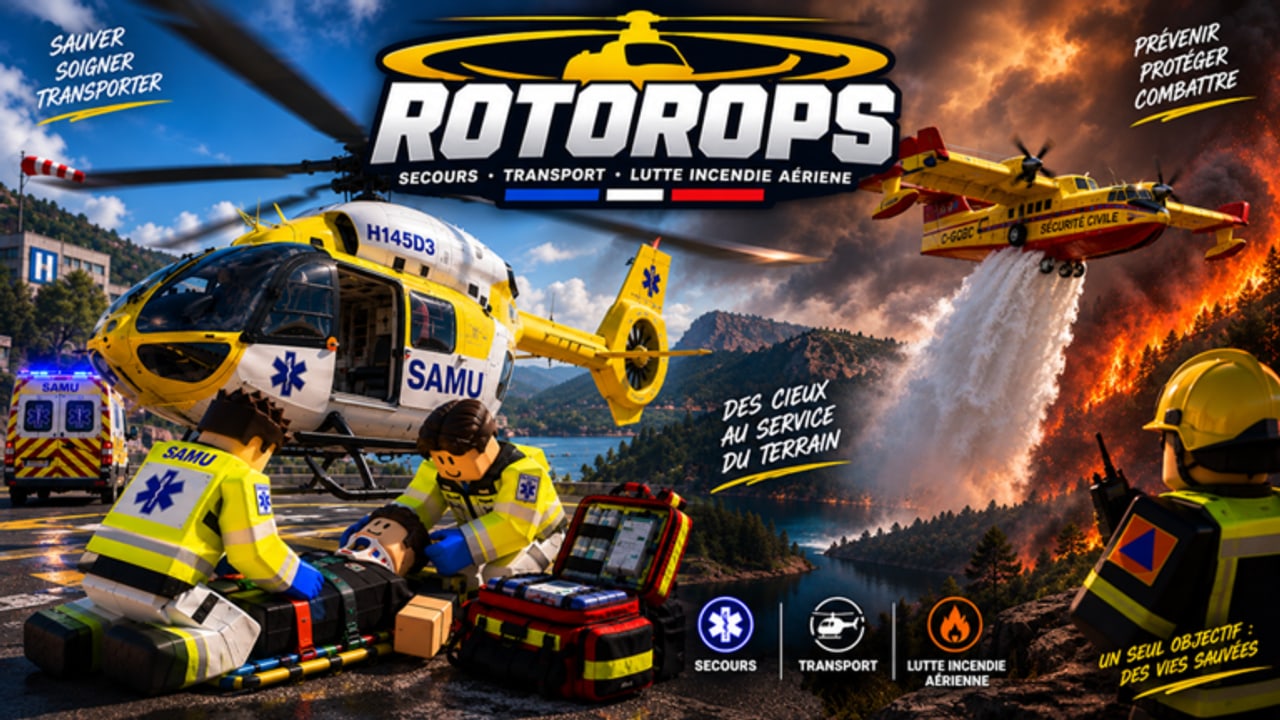
The hoist—also called the winch—lets RotorOps crews reach victims when skids cannot land. Cliffs, dense trees, rooftops, water edges, and fire-adjacent clearings all turn into hoist problems. This guide explains the rescue workflow, how pilots and medics split tasks, and how medical care still gates boarding even when the patient arrives on a cable. Watch the mid-page video for a live look at hoist timing, then use the checklists here until callouts become automatic.
Prerequisites: Getting Started, controls and flying, and medical missions. Fuel planning from how to refuel matters because hovers drink tanks.
When to choose hoist over landing
Land when the clearing is flat, wide, and free of rotors hazards. Choose hoist when:
- Terrain slopes or breaks under the skids.
- Obstacles surround the victim.
- Fire, smoke, or crowds make a touchdown selfish or unsafe.
- Water or soft ground risks a rollover.
- A quick aerial pickup beats a long hike with a critical patient.
Do not hoist for style points. Winch work is slower and needs more crew discipline. If a pad exists fifty meters away, land and walk.
Team roles on a hoist rescue
Pilot. Delivers a rock-stable hover over the target, holds altitude, manages fuel bingo, and refuses to drift while someone is on the line. Uses Shift and Ctrl in tiny taps. Calls “stable,” “drifting,” and “bingo.”
Hoist operator / medic. Runs the winch controls, communicates cable status, and often performs or assists medical care. In a two-medic team, one can own the hoist while the other owns the medical file and interventions.
Second medic. Treats on the ground or in the cabin, hooks patients, and confirms boarding only after care is complete.
The standard RotorOps crew fantasy remains one pilot plus two medics. Hoist missions are why that third seat exists. Find partners on the players hub if you are always short-handed.
Pre-hoist brief (thirty seconds that save the sortie)
- Confirm the target description and hazards.
- Decide who rides the cable versus who stays in cabin.
- Restate medical plan: file, collar, splint, tourniquet, airway, respirator as required.
- Set a fuel bingo for the hover.
- Agree on abort words: “break break” or “abort hoist” means freeze and recover.
If anyone is unclear, do not pay out cable yet.
Pilot hover workflow
- Approach into the wind when you can read it—more stable hover.
- Descend early with Ctrl; arrive slow.
- Stop translational drift over the victim or clearing.
- Call “stable” only when the cabin is calm.
- Hold collective with micro corrections; do not chase every bump.
- Announce fuel states every minute on long hoists.
- If you lose the hover, call “drifting” so the operator stops the evolution.
- After the load is in, climb vertically first, then transition to cruise.
Night hoists need N for night vision plus extra altitude awareness. Wires are harder to see; if uncertain, abort and relocate.
Winch and crew workflow
Exact button prompts can shift during the Veltsim_Officiel BETA, so learn the current on-screen hoist interactions in a safe hangar practice if possible. The logical sequence stays stable:
- Aircraft stable over target.
- Open or arm the hoist system.
- Pay out cable to the medic or hook.
- Medic reaches the victim or hooks the litter.
- Complete required medical care before you expect boarding clearance.
- Signal ready for pickup.
- Reel in smoothly while the pilot holds position.
- Secure the patient in the cabin and cancel further cable motion.
- Pilot climbs out on command.
Never reel wildly while the pilot is correcting a big drift. Never climb out while the cable is still live with a person attached.
Medical care still comes first
Hoist is transport, not a skip code for treatment. RotorOps victims will not board until care is done. On the ground under the rotor wash:
- Open the medical file immediately.
- Apply cervical collar before rough lifts when indicated.
- Splint and tourniquet as the file requires.
- Use intubation probe and respirator when airway and breathing demand it.
If care is easier in the cabin, still finish every required step before you treat the boarding gate as open. Fighting the UI mid-climb is how people drop objectives. Full detail lives on medical missions.
Communication script that works
Use short, repeatable lines:
- Pilot: “On station, stable.”
- Operator: “Cable going out.”
- Medic: “On the ground,” then “file open,” “collar on,” “ready to hook.”
- Operator: “Coming up.”
- Medic: “In cabin, cable clear.”
- Pilot: “Climbing out.”
If voice chat is noisy, type the same phrases. Ambiguity on a live cable is worse than silence.
Fuel, damage, and abort criteria
Hovers burn fuel faster than cruise. Pair every hoist plan with refuel discipline. Abort the hoist if:
- Fuel hits bingo.
- Hover becomes unsafe.
- Fire jumps into your column—coordinate with firefighting units.
- Aircraft condition worsens after a strike.
- Crew loses visual on the cable or patient.
Abort early, recover to base, refuel, and reattempt. Heroic last seconds create double patients.
Practice progression
- Stable twenty-second hovers over a hangar marking with no cable.
- Daylight cable pay out and reel with no patient.
- Friend pickup without medical tools.
- Full medical checklist under the aircraft.
- Night hoist with N enabled and stricter bingo.
- Dual-medic run where roles never cross-talk over each other.
Log mistakes. Most failures are drift, missed “stable,” or boarding before respirator and airway steps finish.
Aircraft choice for hoist work
Pick a helicopter you can hover without drama. Starter EC145-class deploys and free Civil Security or SAMU liveries are enough to learn. Save pricey unlocks like the EC-135 until your hover is boring. Region brand swaps (Airbus versus Bell/Boeing) do not change the need for a steady platform—see the tier list for handling notes.
Common hoist mistakes
- Calling stable while still sliding laterally.
- Paying cable before the brief finishes.
- Skipping medical file steps because “we are on the winch.”
- Climbing out with cable still live.
- No bingo call during a long dual-medic treatment.
- Trying to hoist inside active water-drop paths.
After the rescue
Secure the cabin, fly smooth to the destination, then recover to hangar or base for fuel. Debrief one improvement only—too many notes get ignored. Watch updates if hoist prompts change in BETA patches, and use community Discord https://discord.gg/rotorops-roblox for sudden break reports.
Master the hoist and you unlock half the map’s rescue geography. Stable hover, clear callouts, finished care, safe reel, climb out, refuel. That is the entire craft.
Frequently Asked Questions
Quick answers to the most common RotorOps questions.
When should I use the hoist instead of landing?
Use the hoist when terrain, obstacles, fire, water, or crowds make a skid landing unsafe. If a clear pad is nearby, land and walk—it is usually faster and simpler.
Does hoist rescue skip medical treatment?
No. Victims still require completed care—medical file, collar, splint, tourniquet, intubation probe, and respirator as needed—before boarding unlocks.
What does the pilot do during a winch evolution?
Hold a stable hover, call drift and fuel states, and refuse to climb out until the cable is clear and the crew confirms the patient is secure.
How many crew members do I need for hoist work?
One pilot plus two medics is the ideal RotorOps team. Solo practice is possible, but a dedicated hoist operator and medic make live calls far safer.
What is the biggest hoist failure you see?
Unstable hovers and skipped callouts. If the aircraft drifts while someone is on the cable, stop the evolution, restabilize, and only then continue.