RotorOps Rescue Fire Police Medical and SAMU Mission Walkthrough
Treat first, board second—crew checklists for every rescue call.
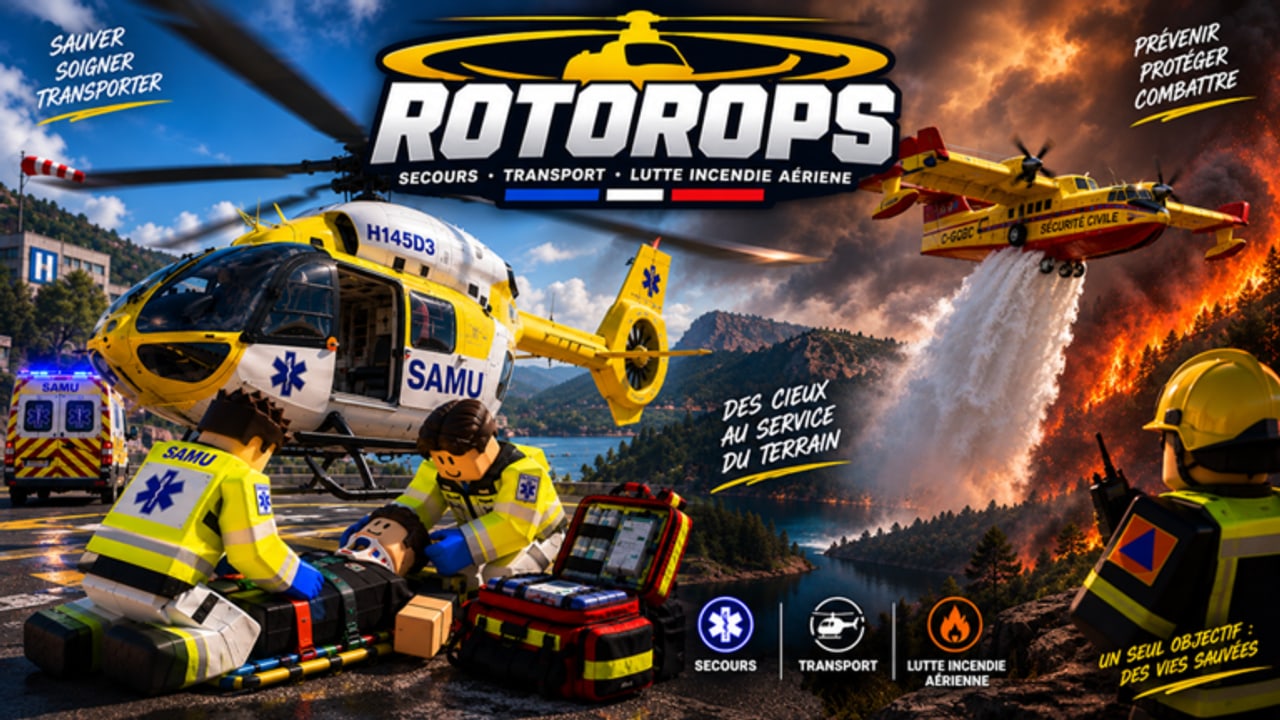
Medical and SAMU sorties are the heart of RotorOps - Rescue & Fire & Police. You will spend more time coordinating care than hot-dogging the helicopter. Victims do not board until treatment is finished, so a fast pilot with slow medics—or medics who skip steps—fails the call. This guide covers the end-to-end medical workflow, equipment checklist, and how pilot versus crew responsibilities split in a standard one-pilot, two-medic team.
Before your first live patient, skim Getting Started and flight controls. When landing zones are impossible, use the hoist. Find teammates and role partners on the players hub.
Mission shape at a glance
- Accept or receive a medical call and note the sector.
- Refuel and depart with a full medical crew if possible.
- Transit cleanly; save fuel for hover and return.
- Approach the victim—on foot from a landing or via hoist.
- Open the medical file and complete required interventions.
- Only then board the patient and secure the cabin.
- Fly to the designated care or base destination.
- Return to hangar or base, refuel, and reset kits for the next alarm.
Every skipped line in that list creates a stuck boarding prompt or an aborted extract. Treat the list as law during BETA weekends when lobbies are busy.
Pilot responsibilities
The pilot owns the aircraft, not the syringe. Your job is a stable platform and an honest fuel plan.
- Preflight: fuel full, systems on, night vision ready if dark, crew briefed.
- Route: shortest safe path; avoid sightseeing detours.
- Arrival: land if the pad is clear; otherwise set up a hoist hover.
- On scene: hold position, call “stable,” and do not yank the aircraft while medics work.
- Boarding: wait for explicit crew confirmation that care is done and the patient is loaded.
- Egress: climb out without clipping trees, then fly smooth—trauma patients hate aerobatics.
- Recovery: land at base, refuel, and report any airframe damage.
Pilots who leave early strand medics. Pilots who hover too high make hoist work miserable. Communicate altitudes and intentions in short phrases.
Medic and crew responsibilities
Medics own the patient timeline. In a two-medic crew, split tasks: one opens the medical file and leads interventions; the other manages kit handoffs, hoist hooks, and boarding requests. If you only have one medic, the pilot may need to hold longer—plan fuel accordingly.
Crew priorities:
- Reach the victim safely without becoming a second patient.
- Open the medical file as soon as you are in range.
- Apply interventions in a deliberate order rather than spamming tools.
- Call status: “file open,” “collar on,” “airway done,” “ready to board.”
- Request boarding only when care is complete.
- Secure the patient and signal the pilot to depart.
Shared mission bonuses reward the whole team when the rescue completes. Cutting corners to save thirty seconds often costs the bonus and the patient.
Medical equipment checklist
Community and in-game medical flow centers on these tools. Carry the mental checklist every sortie:
- Medical file — Open first. It tells you what the victim needs and gates progress.
- Cervical collar — Stabilize the neck before rough movement or hoist lift.
- Splint — Immobilize injured limbs so transport does not worsen fractures.
- Tourniquet — Control severe bleeding when indicated by the file or scene.
- Intubation probe — Secure a difficult airway when the scenario requires it.
- Respirator — Support breathing before and during transport.
Not every victim needs every item, but you must complete the care the file demands. If boarding stays locked, re-open the file and confirm each required step. Do not blame the pilot for a treatment gate.
Bandages, calf bracing, and dressing placements (community-reported)
After a recent BETA medical-kit UI pass, community tutorials also describe bandage / dressing steps and calf bracing style placements in addition to the classic collar–splint–tourniquet–airway–respirator loop. Exact button names and panel layouts still move—do not memorize a screenshot as law. Instead:
- Re-open the medical file if boarding stays locked after the “classic” tools.
- Look for any remaining bandage, dressing, or bracing prompts the UI still highlights.
- Apply lower-leg bracing or dressing when the file or scene indicates calf / limb support, then reassess boarding.
- Call the step out to the pilot (“bracing on,” “dressing done”) so hover time is not wasted guessing.
Treat these placements as an extension of the same rule: care finishes before hoist or cabin boarding. Cross-check Updates and Discord when the kit panel changes again, and keep Common Mistakes handy if unfinished care keeps stranding your crew.
Starter SAMU or Civil Security liveries are enough to learn this loop. Fancy paint does not open the medical file faster. Spend early attention on tool order and communication instead of cosmetics.
Approach options: land versus hoist
Land and walk. Best when there is a flat clearing, road, or pad near the victim. Pilot lands, medics disembark, treat, board, depart. Faster for equipment access and easier for new crews.
Hoist. Best for cliffs, dense trees, rooftops, water edges, or fire-adjacent zones where skids cannot settle. Pilot holds a stable hover; crew runs the winch workflow from how to use the hoist. Treatment still happens—sometimes on the ground before lift, sometimes with constrained space. Agree before the sortie who hooks and who treats.
Hybrid calls happen: land nearby, hike the last meters, then request a short reposition. Keep the pilot informed so the aircraft is not sitting on empty tanks.
On-scene medical workflow (detailed)
Close the distance carefully. Announce arrival to the pilot. Open the medical file immediately. Read what is required instead of guessing. Apply cervical collar early if spinal risk is present. Splint and tourniquet as indicated. Manage airway with intubation probe when the file calls for it, then support with the respirator.
Reassess: if the UI still blocks boarding, something remains unfinished. Check for a missed tool or an interaction distance issue. Once the patient is cleared, request boarding, load together, and confirm doors or cabin state per current BETA behavior.
During cabin flight, one medic should watch the patient while the other watches for new prompts. The pilot should avoid hard banks. If night conditions apply, the pilot may use N for vision while medics use cabin lighting and kit UIs.
Crew versus pilot decision guide
| Situation | Who decides | Why |
|---|---|---|
| Land or hoist | Pilot with crew input | Aircraft limits and fuel |
| Treatment order | Lead medic | File requirements |
| When to board | Medics | Care gate |
| When to climb out | Pilot after crew ready | Safety and rotors |
| Abort for fuel | Pilot | Bingo fuel overrides ego |
| Abort for fire encroachment | Either, call it loud | Scene safety |
Arguments in voice chat waste oxygen. Use the table. If fuel is bingo, you leave and return—patients are not helped by a forced landing far from base.
Training plan for medical mains
- Run two land-based rescues focusing only on file plus collar and splint speed.
- Add tourniquet and airway tools on the next two calls.
- Practice one hoist extract with a patient friend from players.
- Fly a night call with pilot on N while medics run the full checklist.
- Debrief: which step stalled boarding, and who forgot a callout?
Repeat until boarding never surprises you. Then you can help newer medics without blocking the squadron.
Common medical failures
- Trying to board before respirator, airway, or required bandage / bracing steps finish.
- Opening tools without opening the medical file.
- Pilot drifting during hoist while a medic is hooked.
- No boarding request, so the pilot never knows care is done.
- Empty tanks because nobody planned hover time for treatment.
- Bringing a fire or police mindset to a SAMU call and skipping soft skills.
Synergy with other roles
Sometimes medical calls sit next to fire or crowd-control events. Do not freestyle into firefighting without reading firefighting missions. If gendarmerie units are searching for a missing person who then needs care, hand off cleanly from observation to SAMU—see gendarmerie missions. Multi-role nights are easier when each specialist keeps a narrow focus.
After-action and progression
Successful medical loops fund better airframes and liveries. Still, prioritize crew skill over buying the EC-135 too early. A cheaper EC145-class deploy with a sharp SAMU team outperforms an expensive empty cabin. Track patch notes on updates if medical item order or boarding rules change during BETA.
Medical excellence in RotorOps is boring on purpose: approach, file, collar, splint, tourniquet, airway, respirator, board, fly, refuel. Master that sentence and you become the teammate every pilot wants.
Frequently Asked Questions
Quick answers to the most common RotorOps questions.
Why can I not board the victim yet?
RotorOps requires medical care to finish first. Open the medical file and complete required steps such as cervical collar, splint, tourniquet, intubation probe, respirator, and any remaining bandage or calf bracing prompts before boarding unlocks.
What is the standard medical crew size?
The intended team is one pilot plus two medics. Solo practice works for learning tools, but boarding requests and shared bonuses are smoother with a full crew.
Should medics land or use the hoist?
Land when there is a safe clearing. Use the hoist for cliffs, trees, rooftops, or other no-landing zones, and keep the pilot in a stable hover the whole time.
Do I need a special SAMU helicopter skin?
No. Free Civil Security or SAMU starter liveries are enough to learn. Focus on the medical checklist and communication before spending heavy credits on airframes.
Who says when the aircraft can leave?
Medics confirm care and boarding are complete; the pilot then departs and owns fuel and flight path. Either role can call an abort if the scene becomes unsafe.